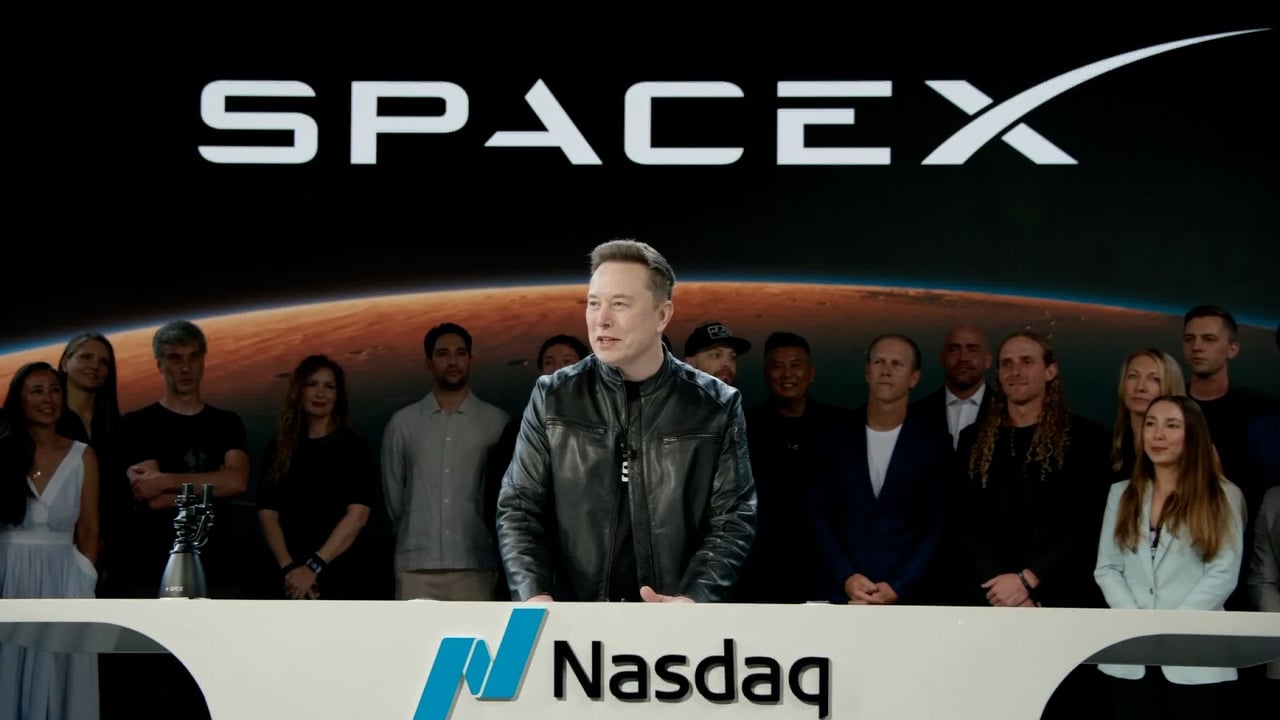
SpaceX IPO Surges in Nasdaq Debut, Stock Pops Over 25% on Record Trading Volume
SpaceX made a historic public market debut on the Nasdaq, with shares of the aerospace and AI-focused company surging more than 25% during its first day of trading under the ticker SPCX. The listing marks one of the most anticipated IPOs in recent market history, drawing massive investor attention across both institutional and retail channels.
Shares opened at $150 after being priced at $135 in the offering, quickly climbing above $160 shortly after the opening bell. Intraday highs reached nearly $177, pushing the company’s valuation above the $2 trillion mark during peak trading.
The debut was marked by extraordinary volume, with hundreds of millions of shares changing hands within hours. Retail investors played a significant role, with trading activity reportedly setting records for IPO-day participation across multiple brokerage platforms.
SpaceX leadership, including CEO Elon Musk and President Gwynne Shotwell, participated in ceremonial market-opening events across separate locations, highlighting the global scale of the company’s transition into public markets.
Strong Retail Demand and Market Momentum
Early trading data showed SpaceX becoming one of the most actively traded stocks on launch day, with retail investors accounting for a significant portion of volume. Market analysts noted that interest levels surpassed previous major IPOs, reflecting strong demand for high-growth technology and space infrastructure companies.
Exchange-traded fund issuers also moved quickly, with dozens of ETF filings tied to SpaceX appearing around the debut. Many of these funds aim to provide leveraged exposure, amplifying both gains and losses tied to the stock’s daily performance.
Investor Debate Over Valuation and Growth
While enthusiasm around the IPO was high, the listing also sparked debate among analysts regarding valuation metrics. SpaceX reported substantial revenue growth in recent years, driven largely by its Starlink satellite internet business, but remains unprofitable overall, with multi-billion-dollar net losses accumulated since its founding.
Despite this, supporters point to long-term opportunities in satellite communications, orbital infrastructure, and potential AI integration across future projects, including data center expansion in space and next-generation satellite networks.
Critics, however, question whether current valuations fully reflect profitability timelines and execution risks tied to large-scale aerospace ambitions.
Broader Market Impact and Industry Reaction
The IPO has already influenced broader market sentiment, with attention shifting toward other high-profile private companies that could follow a similar path, including leading AI startups.
Financial analysts suggest SpaceX’s public debut may open the door for increased capital flows into advanced technology sectors, while also increasing volatility as newly public megacap growth stocks enter active trading cycles.
Political and Public Response
The listing also drew political commentary, with renewed discussions around wealth concentration, market regulation, and the role of large technology firms in public retirement portfolios. Some policymakers have raised concerns about valuation assumptions and investor protections, while others point to the IPO as a milestone in private-sector innovation scaling into public markets.
What Comes Next for SpaceX Stock
As trading continues, attention will shift toward post-IPO stabilization, institutional index inclusion, and long-term investor positioning. Market participants expect volatility to remain elevated as price discovery continues in the days and weeks following the debut.
SpaceX’s transition into public markets represents a major moment for the technology and aerospace sector, combining space exploration, satellite internet, and artificial intelligence ambitions under one of the most closely watched companies in the world.